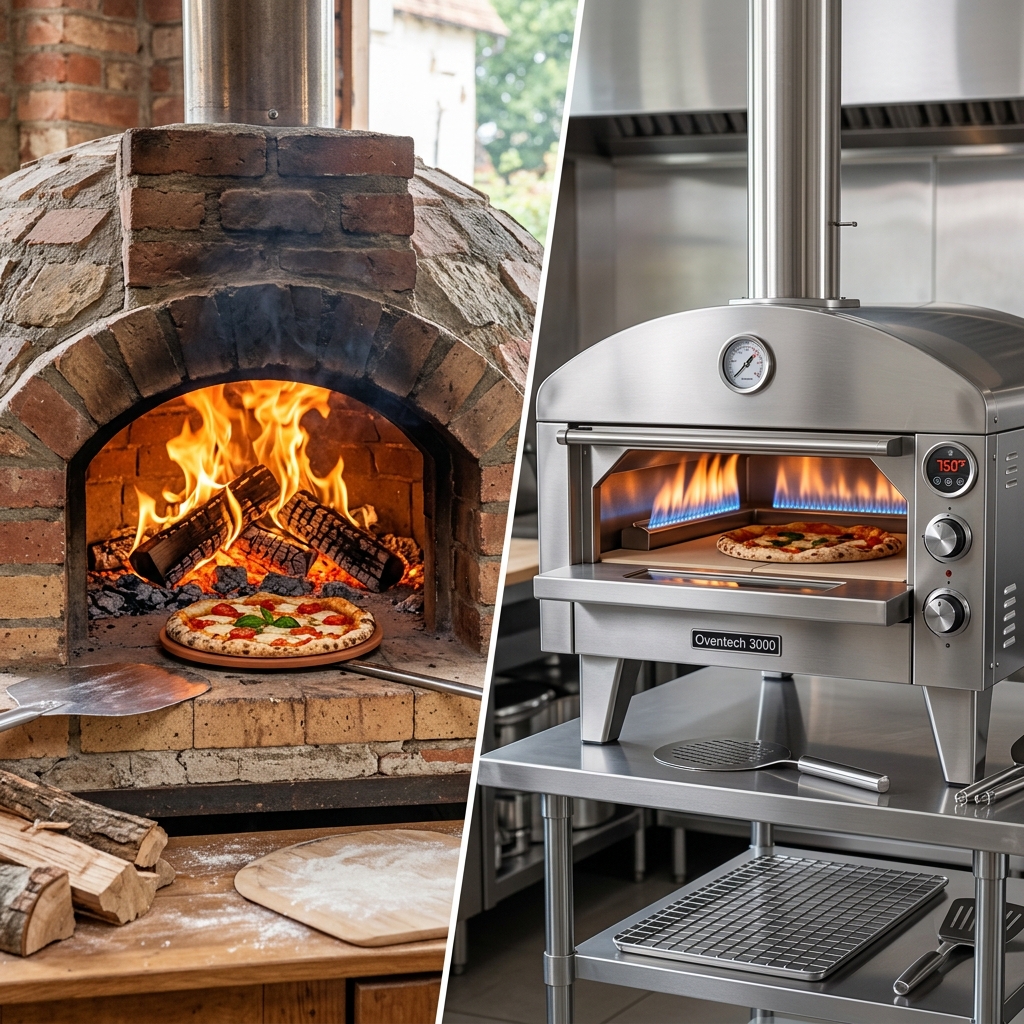
If you're shopping for a pizza oven, you've probably noticed there are three main types: wood fired, gas, and electric. Each one has its fans, and each one has trade-offs.
But which one is actually the best? Well, it depends on what matters most to you.
Let's do an honest, no-BS comparison so you can figure out which one fits your life.
The Flavor Difference
Let's start with the most important thing — how does the pizza actually taste?
Wood Fired
This is where wood fired ovens absolutely dominate. The natural smoke from burning hardwood infuses your pizza with a subtle, complex flavor that's impossible to replicate. The extreme heat creates a char pattern on the crust (those beautiful dark spots called "leoparding") that adds a slight bitterness that balances perfectly with the cheese and sauce.
The flavor from a wood fired oven is the gold standard. It's what Neapolitan pizza is all about, and it's why the best pizzerias in the world still use wood.
Gas
Gas ovens can reach similar temperatures to wood fired ones (some hit 900°F+), and they produce great pizza. The crust can get crispy and charred, the cheese melts beautifully. But here's the thing — there's no smoke flavor. The pizza tastes clean and well-cooked, but it's missing that smoky depth.
Some gas oven manufacturers offer "wood chip trays" to add a bit of smoke. It helps, but it's not the same as a real wood fire.
Electric
Electric pizza ovens (especially countertop models like the Ooni Volt or Breville Pizzaiolo) have gotten really good. They can reach 700-900°F and cook a decent pizza in a few minutes. But the flavor is the most neutral of the three. No smoke, no char from real flames. It's good pizza, but it tastes like... oven pizza.
Winner: Wood Fired — Nothing else comes close on flavor.
Temperature and Cooking Speed
Wood Fired
A properly heated wood fired oven reaches 700-1,000°F. At these temperatures, a pizza cooks in 60-90 seconds (see our full timing guide). That's lightning fast and produces an incredible texture — crispy outside, soft inside.
The downside? It takes 45-60 minutes to heat up a traditional wood fired oven. You can't just turn it on and go. Portable models like the Ooni Fyra heat up in about 15-20 minutes, which is much faster.
Gas
Gas ovens are the convenience champions. Turn a knob and you're heating up. Most reach cooking temperature (700-950°F) in about 15-20 minutes. Cooking time is similar to wood — about 60-90 seconds for a pizza.
Temperature control is also easier. You can dial it up or down precisely, which is harder to do with wood.
Electric
Electric models vary a lot. High-end ones reach 700-900°F in about 15-25 minutes. Budget models might only hit 500-600°F, which means longer cook times and a different result.
The best electric ovens cook a pizza in about 2-4 minutes, which is still great but noticeably slower than wood or gas at peak temps.
Winner: Gas — For the balance of high heat and convenience. Wood wins on max temperature.
Convenience and Ease of Use
This is where the three types really diverge.
Wood Fired
Let's be honest — wood fired ovens are the least convenient option. You need to:
- Source and store dry firewood
- Spend 45-60 minutes heating up
- Manage the fire throughout cooking
- Clean out ash afterward
- Deal with smoke (which your neighbors may not love)
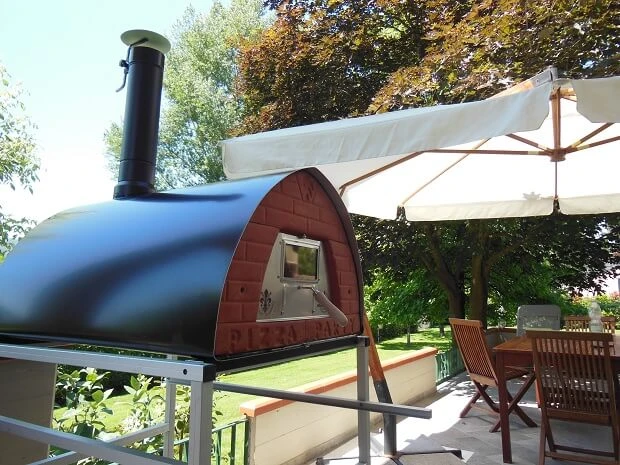
It's a process. Some people love the ritual of it — whether that's building your own backyard oven or just building the fire, tending the flames, the whole experience. Others find it a hassle for a weeknight dinner.
Gas
Gas ovens are significantly easier. Turn a dial, wait 15-20 minutes, cook. No fire management, no ash cleanup, no smoke. Many connect to a standard propane tank that lasts for dozens of cooking sessions.
For people who want great pizza without the work, gas is the obvious choice.
Electric
Electric ovens are the easiest by far. Plug it in, press a button, wait for it to heat up, cook. Many are countertop models you can use indoors. No fuel to buy, no ventilation concerns (mostly), no cleanup beyond wiping down the stone.
Winner: Electric — You literally just plug it in. Gas is a close second.
Cost Comparison
Upfront Cost
| Type | Budget Range | Mid-Range | High-End | |---|---|---|---| | Wood Fired | $200-500 (portable) | $500-2,000 | $2,000-10,000+ (built-in) | | Gas | $300-600 | $600-1,500 | $1,500-5,000 | | Electric | $100-400 | $400-800 | $800-1,500 |
Ongoing Costs
- Wood fired: Firewood costs vary, but expect to spend $5-15 per cooking session depending on your area
- Gas: A propane tank costs $15-25 to fill and lasts for 10-20+ sessions — about $1-2 per session
- Electric: Electricity costs are minimal — probably $0.25-0.50 per session
Winner: Electric — Cheapest to buy and run. Gas is cheapest at the mid-range level.
Versatility
Wood Fired
This is where wood fired ovens shine beyond just pizza. Because of the wide temperature range (from 1,000°F when fully fired to 250°F as it cools), you can cook an incredible variety of food — pizza, bread, roasts, vegetables, desserts, and more. One fire can fuel an entire day of cooking.
Gas
Gas ovens are primarily designed for pizza. Some can handle other foods (flatbreads, small roasts), but they're typically less versatile than a full wood fired oven. The cooking chamber is often smaller too.
Electric
Most electric pizza ovens are pizza-only machines. The cooking chamber is small, and they're optimized for one thing. Some higher-end models can handle other flatbreads and small items, but don't expect to roast a chicken in one.
Winner: Wood Fired — Nothing else is as versatile.
The Experience Factor
This is subjective, but it matters. Cooking with a wood fired oven is an experience. There's something primal and satisfying about building a fire, watching the flames dance, sliding a pizza onto a hot stone, and pulling it out perfectly charred 90 seconds later.
It's a conversation starter at parties. It's an activity, not just a cooking method. Kids love watching the fire. Adults love hanging around it with a drink.
Gas and electric? They're appliances. Great, functional appliances — but they don't have the same soul.
So Which One Should You Get?
Here's my honest recommendation:
Get a wood fired oven if:
- You value flavor above everything
- You enjoy the process and ritual of cooking
- You want versatility (not just pizza)
- You have outdoor space and don't mind some prep time
Get a gas oven if:
- You want great pizza with minimal effort
- Convenience matters more than that last 10% of flavor
- You cook pizza frequently (weekly or more)
- You want fast, predictable results
Get an electric oven if:
- You live in an apartment or don't have outdoor space
- You want the absolute easiest option
- Budget is a primary concern
- You're a casual pizza maker (a few times a month)
There's no wrong answer here. All three can make genuinely good pizza. But if you ask any serious pizza enthusiast what tastes best, the answer is always the same — wood fired.
Comments (0)
No comments yet. Be the first to start the conversation!