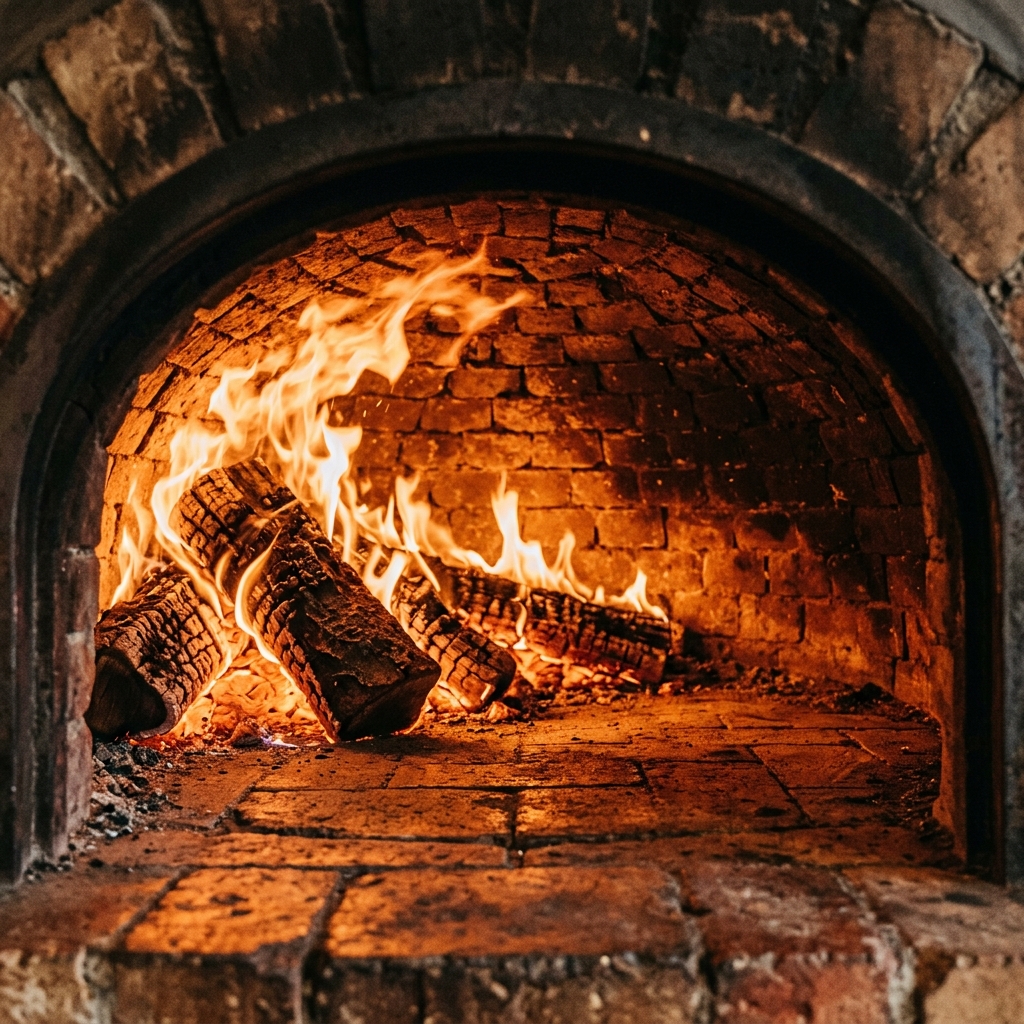
If you've ever eaten a pizza that came out of a wood fired oven, you probably noticed something right away — it just tastes different. The crust is crispy on the outside, soft and chewy on the inside, and there's this smoky flavor that no regular kitchen oven can give you.
But what actually makes a wood fired pizza oven so special? How does it work?
Let's break it down in simple terms.
The Basic Idea Behind a Wood Fired Oven
At its core, a wood fired pizza oven is a dome-shaped structure made from heat-retaining materials like brick, clay, or stone. You build a fire inside it, and once the oven gets hot enough, you push the fire to one side and cook your pizza directly on the hot stone floor.
That's it. Simple, right?
But the magic is in the details. The dome shape, the materials, and the way heat moves around inside the oven — all of that works together to cook your pizza in ways a regular oven simply can't.

The Three Types of Heat
Here's what most people don't realize: a wood fired oven cooks your pizza using three different types of heat at the same time.
1. Conductive Heat (From the Floor)
The stone or brick floor of the oven absorbs an incredible amount of heat from the fire. When you slide your pizza onto that hot surface, it immediately starts cooking the bottom of the dough.
This is called conduction — heat transfers directly from the hot stone to the pizza base. It's why wood fired pizza has that perfectly crisp, slightly charred bottom that's hard to get any other way.
2. Radiant Heat (From the Dome)
The dome above the pizza gets extremely hot too. It radiates heat downward onto the top of your pizza, cooking the cheese, sauce, and toppings from above.
Think of it like a broiler, but way more intense and even. The curved shape of the dome is key here — it reflects heat back down in all directions, so your pizza gets cooked evenly from the top.
3. Convective Heat (From the Air)
As the fire burns, hot air circulates inside the dome. This moving hot air surrounds your pizza and cooks it from all sides at once. It's similar to how a convection oven works, but at much higher temperatures.
The combination of all three — conductive, radiant, and convective heat — is what gives wood fired pizza that unique texture and taste.
Why the Dome Shape Matters
You'll notice that almost all wood fired pizza ovens have a dome or barrel-shaped ceiling. This isn't just for looks.
The dome shape serves a critical purpose: it reflects heat back down onto the cooking surface. Hot air naturally rises to the top of the dome, bounces off the curved walls, and comes back down toward the pizza. This creates a cycle of heat that keeps the oven at a consistent, super-high temperature.
A flat-topped oven wouldn't do this nearly as well. The dome shape is one of the biggest reasons wood fired ovens outperform regular ovens.
The Materials Make a Difference
Wood fired ovens are typically built with:
- Firebrick — These are special bricks designed to handle extreme heat without cracking. They also absorb and store heat, which keeps the oven hot for hours.
- Refractory mortar — Regular mortar would crack under these temperatures. Refractory mortar is made to withstand heat up to 2,000°F or more.
- Insulation — Good insulation (like ceramic fiber blanket or vermiculite) wraps around the outside of the dome to keep heat from escaping.
The thermal mass of these materials is what allows a wood fired oven to stay hot long after the fire dies down. You can fire up the oven, let it heat for an hour, and then cook multiple pizzas without adding more wood.
How the Fire Works
Here's the typical process:
- Build a fire in the center of the oven using dry hardwood (oak, maple, cherry, etc.)
- Let it burn for 45 minutes to an hour, until the dome turns from black (covered in soot) to white/clear
- Push the fire to one side or the back of the oven
- Sweep the floor with a brush to clear any ash
- Slide your pizza in and cook it for 60-90 seconds
The fire stays burning while you cook. This maintains the temperature and continues to provide radiant heat from the flames. Plus, the live fire adds that beautiful smoky flavor.
Why It Cooks So Fast
A wood fired oven can reach temperatures between 700°F and 1,000°F (370°C to 540°C). Compare that to your home oven, which usually maxes out around 500°F.
At these extreme temperatures, a pizza cooks in 60 to 90 seconds (check out our guide on how long a wood fired pizza takes to cook for different styles). That speed is actually important — it means the crust gets crispy and charred on the outside while the inside stays soft and airy. The toppings heat through quickly without overcooking, and the cheese melts perfectly without drying out.
If you cooked a pizza that fast in a regular oven (assuming it could get that hot), you'd get similar results. But regular ovens just can't reach those temperatures.
The Smoky Flavor Factor
One last thing that makes wood fired ovens special: the smoke.
When hardwood burns, it releases natural smoke compounds that settle onto your pizza as it cooks. Different woods give slightly different flavors — oak is subtle and classic, cherry adds a mild sweetness, and hickory gives a stronger smoky punch.
This is something gas and electric ovens simply can't replicate. It's the same reason barbecue tastes better over wood than on a gas grill.
Wrapping It Up
So to sum it all up, a wood fired pizza oven works by:
- Using a dome shape to trap and reflect heat
- Cooking with three types of heat at once (conduction, radiation, convection)
- Reaching extreme temperatures (700-1,000°F)
- Using thermal mass materials to store heat
- Adding natural smoky flavor from burning hardwood
It's simple technology that's been around for thousands of years, but it produces results that modern ovens still struggle to match. If you've been thinking about getting a wood fired oven — now you know exactly why they're worth it.
Comments (0)
No comments yet. Be the first to start the conversation!