
One of the first things people notice about wood fired pizza is how fast it cooks. We're talking 60 to 90 seconds. That's not a typo — under two minutes from raw dough to finished pizza.
How is that possible? It all comes down to temperature. Wood fired ovens get seriously, ridiculously hot. And that extreme heat is the single biggest reason why wood fired pizza tastes the way it does.
Let's dig into the numbers.
The Temperature Range
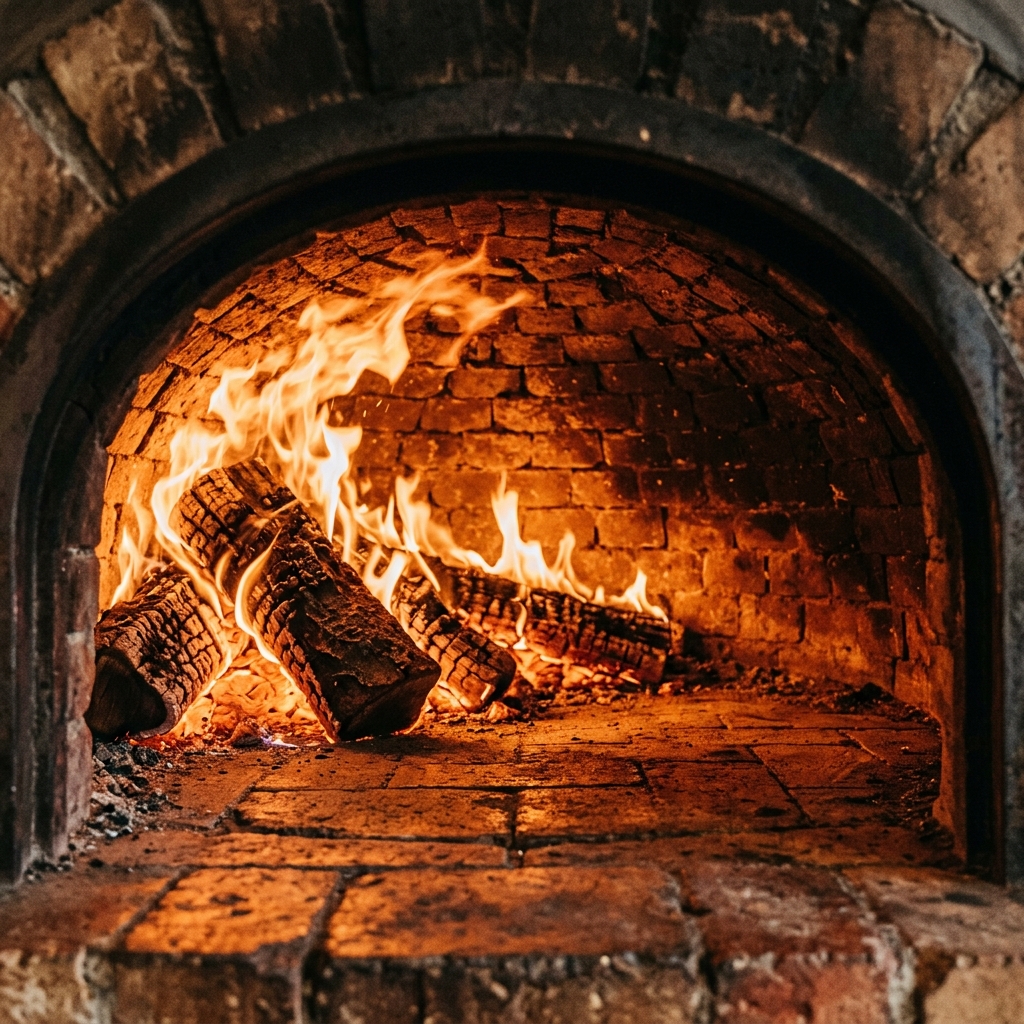
A well-built, properly heated wood fired pizza oven (especially when using the right wood, or a mix of wood and charcoal) reaches temperatures between 700°F and 1,000°F (370°C to 540°C).
Here's how that breaks down:
- Oven floor surface: 700-850°F (370-450°C)
- Dome/ceiling: 800-1,000°F (425-540°C)
- Air temperature inside: 700-900°F (370-480°C)
For context, your kitchen oven at home maxes out at about 500-550°F. A wood fired oven is nearly double that at its peak.
Even portable wood fired ovens (like the Ooni, Roccbox, or Bertello) can reach 900°F+ with the right setup.
Why Does Temperature Matter So Much?
You might think: "Hot is hot. What's the big deal between 500°F and 900°F?"
Actually, the difference is massive. Here's why.
1. Speed Creates Better Texture
At 800-900°F, a pizza cooks in about 60-90 seconds. At 500°F (a regular oven), the same pizza takes 8-12 minutes.
Why does speed matter? Because the faster the pizza cooks, the less moisture escapes from the dough. This means:
- The outside gets crispy and slightly charred
- The inside stays soft, airy, and slightly moist
- You get that perfect contrast between crunchy crust and pillowy interior
In a slower oven, the dough dries out before the outside has time to develop proper char. The result is a uniformly dry, bready crust — edible, but nowhere near as good.
2. The Leopard Spotting Effect
Those beautiful dark spots on Neapolitan pizza crust? They're called "leopard spots" and they only happen at extreme temperatures.
When the dough surface hits about 700-800°F, it undergoes rapid carbonization in small patches where bubbles form. This creates that spotted pattern of char and pale dough that's the hallmark of authentic wood fired pizza.
At lower temperatures, the entire surface browns uniformly. It looks fine, but it's not the same thing.
3. Cheese Melts Differently
At 800°F+, mozzarella melts and gets bubbly in seconds. The cheese gets those brown, blistered spots on top while still being gooey and stretchy underneath. The rapid heat also causes slight caramelization on the surface of the cheese, adding sweetness and depth.
At lower temperatures, cheese melts more slowly and evenly. It can overcook and become rubbery or oily before the crust finishes cooking.
4. Toppings Stay Fresh
Because cooking happens so fast, toppings like fresh basil, arugula, and prosciutto don't have time to wilt or dry out. They go on raw and come out perfectly wilted or barely kissed by heat — exactly how they should be.
In a slower oven, delicate toppings cook too long and lose their color, texture, and flavor.
How to Measure Your Oven Temperature
You can't just guess at these temperatures. Here are the tools you should use:
Infrared Thermometer (Recommended)
This is the most popular tool for wood fired oven owners. Point it at the oven floor, dome, or walls and get an instant temperature reading. They cost about $20-40 and are incredibly useful.
Tip: Measure the floor temperature in the spot where you'll place your pizza. That's the reading that matters most.
Built-in Thermometer
Some ovens come with a built-in dial thermometer mounted in the dome. These give you a general sense of how hot the oven is, but they measure air temperature near the dome — not the floor where the pizza actually cooks. They're useful as a reference but not precise enough to rely on alone.
The Flour Test
Don't have a thermometer? Here's an old-school method: toss a small pinch of flour on the oven floor.
- If it catches fire immediately, the oven is too hot (1000°F+). Let it cool a bit.
- If it turns black in about 10 seconds, you're in the sweet spot (800-900°F).
- If it turns dark brown slowly (20-30 seconds), you're on the lower end (600-700°F). Good for bread, but let it heat more for pizza.
Ideal Temperature Zones for Different Foods
| Food | Ideal Floor Temp | Ideal Dome Temp | |---|---|---| | Neapolitan pizza | 750-850°F | 900-1,000°F | | New York-style pizza | 600-700°F | 700-800°F | | Flatbreads and naan | 650-750°F | 750-850°F | | Steaks (searing) | 700-800°F | 800-900°F | | Fish | 500-600°F | 600-700°F | | Roasted vegetables | 500-650°F | 600-750°F | | Bread | 450-550°F | 500-600°F | | Roast chicken | 400-500°F | 450-550°F | | Slow-cooked meats | 275-350°F | 300-400°F | | Desserts | 350-450°F | 400-500°F |
How Long Does It Take to Reach Temperature?
This depends on the type of oven:
Traditional Brick/Masonry Oven
A full-size built brick oven takes 45-90 minutes to reach cooking temperature. The heavy thermal mass needs time to absorb heat. But once it's hot, it stays hot for hours — even after the fire dies.
Portable Ovens (Ooni, Roccbox, etc.)
These lighter ovens heat up in 15-25 minutes because they have less thermal mass. They're faster to start but also cool down faster.
Modular/Pre-built Ovens
Mid-range modular ovens (like the Forno Bravo Primavera or Chicago Brick Oven) take about 30-45 minutes to reach temp. A good middle ground between portables and full brick builds.
Common Temperature Mistakes
1. Cooking Before the Oven Is Ready
The dome of a brick oven starts out covered in black soot from the fire. As it heats up, that soot burns off and the dome turns white or clear. Don't cook until the dome has fully cleared — this indicates the oven has absorbed enough heat.
2. Floor Too Hot, Dome Too Cold
If you slide a pizza in and the bottom burns before the top cooks, your floor is too hot relative to the dome. Solution: let the fire burn longer to heat the dome, or push the fire further back to give the floor a moment to balance.
3. Not Rotating the Pizza
The side of the pizza closest to the fire cooks faster. Rotate the pizza 180° halfway through (after about 30-45 seconds) for even cooking.
4. Overloading the Oven
Each pizza you slide in absorbs heat from the floor. If you put in too many at once, the floor temperature drops and your crusts won't cook properly. Stick to one or two pizzas at a time for a standard home oven.
The Takeaway
Wood fired ovens get insanely hot — up to 1,000°F — and that extreme heat is what makes the pizza so good. The rapid cook time creates a texture and flavor that's impossible to achieve at lower temperatures.
If you're getting into wood fired cooking, invest in an infrared thermometer. Knowing your oven temperature takes the guesswork out of cooking and helps you get consistent, perfect results every time.
Comments (0)
No comments yet. Be the first to start the conversation!